DLP Lithography Stage Upgrades
Tags: 3D CAD / Reverse Engineering / FEA / HackerFab
← See all ProjectsIntroduction
Like the Sputter deposition chamber, the DLP lithography station is used by UW HackerFab for their open-source chip fab. The initial configuration of the lithographer was horizontal and had troubles securing the silicon substrate to a vertical surface, parallel to the lens of the lithographer.
Version 1: Aluminium Extrusion
The initial stage was made to vertically align the DLP Photo Lithographer over an assembled stepper stage. This was done with aluminium extrusion for ease of assembly and high repeatability. Two 3D printed mounting bracket was designed for the stage and projector by Gursaaz Gund in OnShape.
Since the lithographer is being suspended it was important to cut the weight down to improve stability. I removed the outer aluminium casing and cooling fans. The cooling fans were replaced with a passively cooled heat sink.
Due to the brackets being 3D printed there is the issue of creeping while supporting the projector and the stage. It is most noticable in the stage as it has a large cantilevered moment, causing it to sag. This concern was verified by Jerico during patterning when focusing a corner the opposite corner would shift out of focus
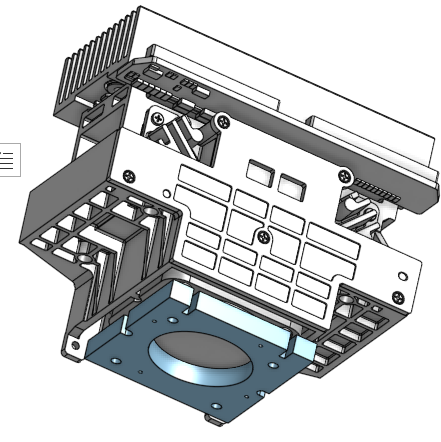
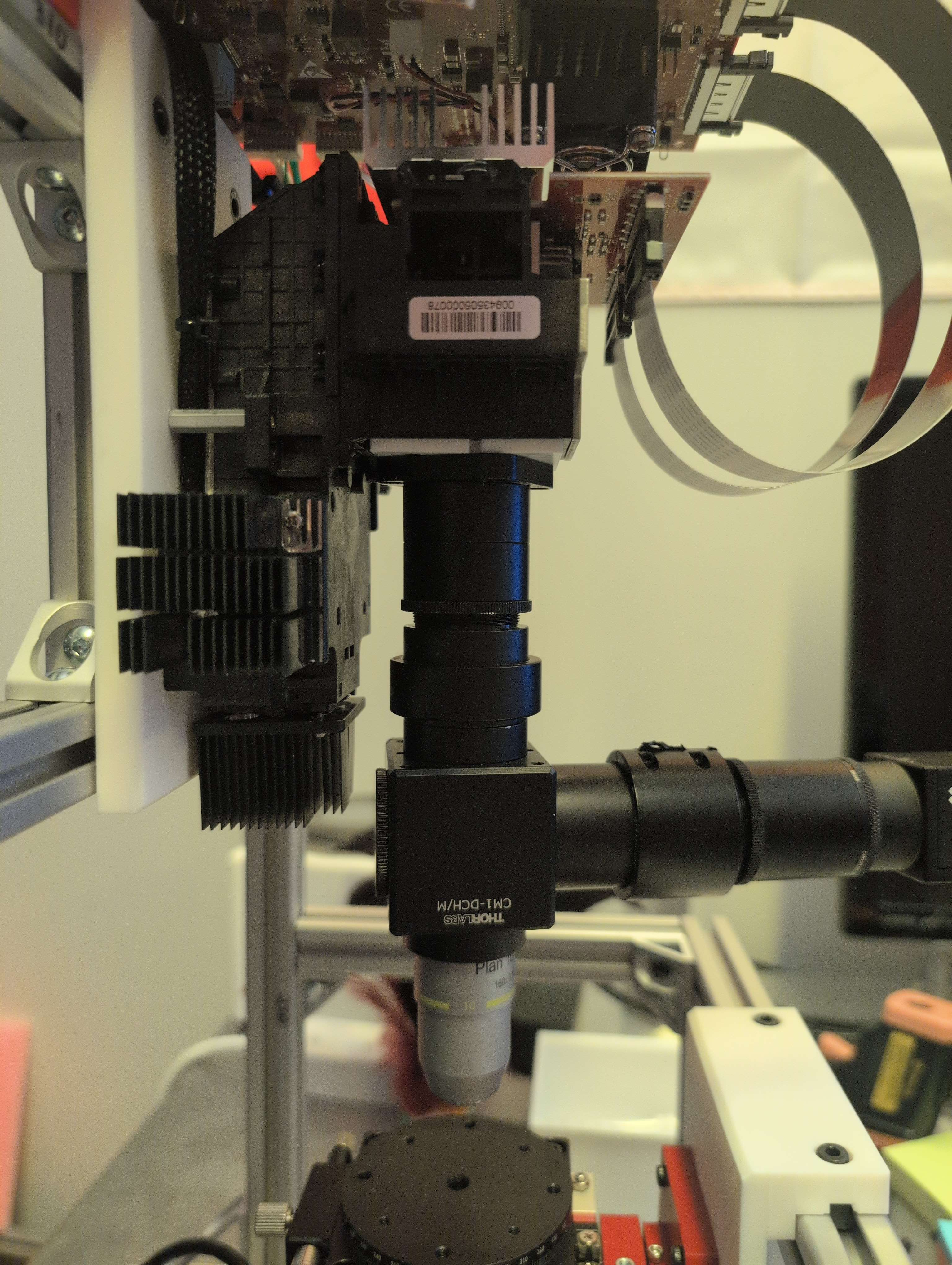
Another issue discovered by Jerico was that the 3D printed bracket supporting the optics of the projector was sagging. This was solved by reprinting the bracket with a higher infill.
Version 2: Salvaged Components
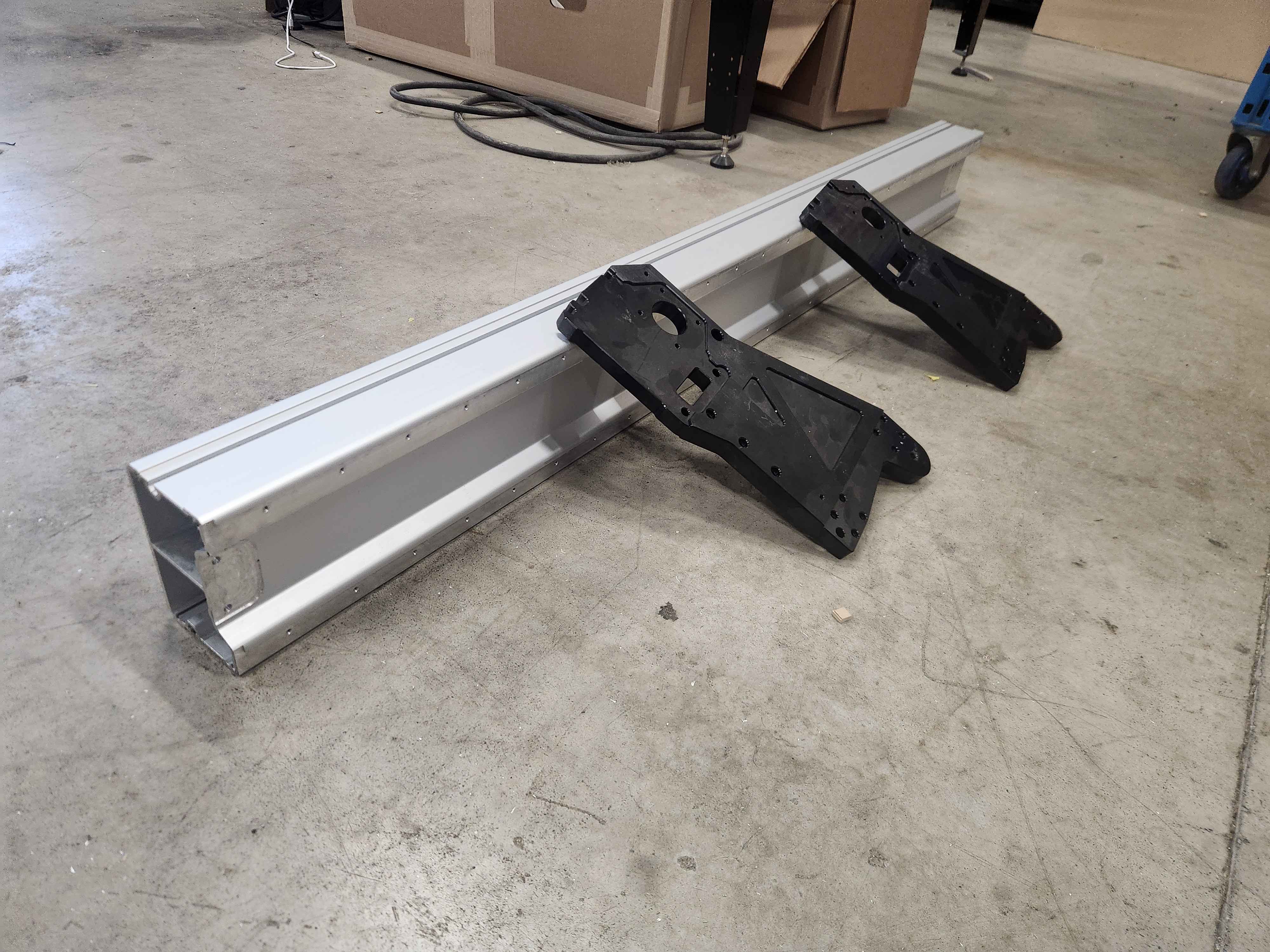
To improve the parallelism of the whole assembly it is optimal to mount the stepper stage and the projector to the same plate. As long as we can ensure it's flatness we can know that the lens of the projector and the top face of the stepper stage are parallel. To reduce the sagging the bracket should be made from aluminium instead of being 3D printed.
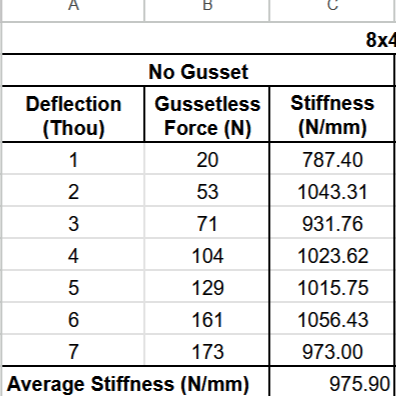
There is concern about vibrations and stiffness of the whole assembly, this can be be relieved in an overkill fashion by salvaging prototype components from an Altmill 4x8 CNC. The average stiffness was experementally determined to be 976 N/mm when applying a force parallel to the length of the extrusion. The heft of the assembly should also act as a dampener for any external vibrations.
This is a work in progress and will be updated accordingly.